Dr. Joseph Kenny Vermeille
A Comprehensive K-12 Educational Technology Framework for the 21st
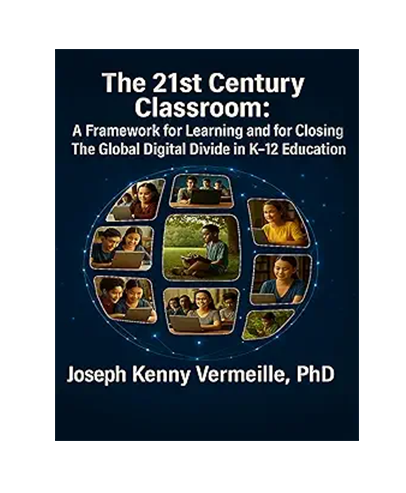
Complete Book Summary
Overview and Purpose
Structure:
Three-part framework integrating theoretical foundations, literary analysis, and practical applications
This comprehensive work presents a transformative framework for K-12 educational technology that addresses the evolving needs of 21st-century education. The book integrates academic theory, contemporary literature, and applied practices to create a roadmap for leveraging technology to enhance teaching and learning while addressing critical challenges like equity and inclusiveness.
Three-Part Framework
The book follows a systematic Knowledge Area Module (KAM) structure
Theoretical Component (Breadth)
Foundational learning and development theories
Literary Component (Depth)
Contemporary research and thematic analysis
Application Component
Practical implementation across diverse settings
Key Features
- 12 detailed tables analyzing various aspects of educational technology
- 11 comprehensive figures illustrating theoretical concepts
- 4 extensive appendices providing practical tools and resources
- Global perspective addressing high-tech, low-tech, and no-tech environments
Part 1: Theoretical Foundations
Core Educational Philosophers
The theoretical foundation examines three influential educational theorists:
Four Cognitive Development Stages:
- Sensorimotor Stage (0-2 years)
- Preoperational Stage (2-7 years)
- Concrete Operational Stage (7-11 years)
- Formal Operational Stage (12+ years)
Key Concepts:
Assimilation, accommodation, equilibration, schema theory
Educational Impact:
Age-appropriate learning, hands-on exploration, developmental readiness
Sociocultural Theory:
Emphasis on social interaction in cognitive development
Zone of Proximal Development (ZPD):
Gap between independent and guided learning
Key Concepts:
Scaffolding, More Knowledgeable Others (MKO), cultural tools
Educational Impact:
Collaborative learning, peer tutoring, culturally responsive teaching
Three Modes of Representation:
- Enactive (action-based)
- Iconic (image-based)
- Symbolic (language-based)
Spiral Curriculum:
Revisiting concepts with increasing complexity
Key Concepts:
Discovery learning, scaffolding, cultural amplifiers
Educational Impact:
Progressive curriculum design, technology integration
Comparative Analysis
Four Cognitive Development Stages:
- Constructivist approach to learning
- Emphasis on active learner engagement
- Recognition of developmental progression
- Importance of interaction (environmental, social, cultural)
Differences:
- Piaget: Individual cognitive development through biological maturation
- Vygotsky: Social and cultural mediation of learning
- Bruner: Cultural tools and representation modes in knowledge construction
Part 2: Literary Component – Thematic Analysis
Five Major Themes
The literary review identifies five persistent themes from contemporary educational technology research:
Subthemes:
- Constructivist Foundations: Active knowledge construction, learner-centered approaches
- Critical Thinking: Problem-solving, reflection, analytical skills development
- Computational Thinking: Algorithm design, logical reasoning, systematic problem-solving
Key Insights:
- Technology enhances constructivist principles when promoting active learning
- Digital tools support scaffolding and collaborative knowledge construction
- Virtual environments provide authentic, situated learning experiences
Subthemes:
- Digital Divide: Equity issues in technology access and digital literacy
- Social Networking: Collaborative platforms and online communities
- Collaboration and Communication: Digital tools for peer interaction
- Net Citizenship: Digital ethics, online safety, responsible technology use
Applications:
- Wikis, blogs, and social media for collaborative learning
- Cloud-based platforms for content sharing and creation
- Online discussion forums for extended classroom dialogue
Subthemes:
- Educational Technology Curriculum: Integration strategies and curriculum design
- Educational Technology Literacy: Teacher and student digital competencies
- 21st Century Skills: Critical thinking, creativity, collaboration, communication
Focus Areas:
- Hands-on experiential learning with technology
- Simulation and gamification for engagement
- Real-world problem-solving applications
Subthemes:
- Government Standards: National and state-level technology requirements
- Industry Standards: Professional certification and competency frameworks
- International Standards: Global benchmarks for educational technology
Key Frameworks:
- ISTE Standards for Students and Educators
- UNESCO ICT Competency Framework
- National educational technology plans and policies
Subthemes:
- Best Practices: Evidence-based implementation strategies
- Methodologies and Processes: Systematic approaches to technology integration
- Technological Tools: Specific platforms, software, and hardware solutions
Implementation Areas:
- Learning Management Systems (LMS)
- Adaptive learning platforms
- Virtual and augmented reality applications
- AI-driven educational tools
Part 3: Application Component
High-Tech Environments
- Advanced Tools: AI-driven adaptive learning, cloud computing, VR/AR
- Features: Personalized learning experiences, real-time collaboration, immersive technologies
- Examples: Google Workspace, advanced LMS platforms, sophisticated analytics tools
Low-Tech Environments
- Solutions: Offline-compatible applications, preloaded tablets, localized systems
- Strategies: Mobile labs, downloadable content, basic digital tools
- Examples: Offline learning modules, simple educational apps, basic connectivity solutions
No-Tech Environments
- Approaches: Non-digital strategies, community-driven models, traditional methods
- Tools: Print materials, radio/TV instruction, solar-powered devices
- Examples: Modular lesson plans, broadcast education, peer teaching networks
Target Audiences
Educators and Teachers
- Practical strategies for technology integration
- Professional development resources
- Classroom implementation guidance
Education Administrators and Policymakers
- Resource allocation frameworks
- Policy development guidance
- Institutional change management
EdTech Entrepreneurs and Startups
- Market insights and user behavior analysis
- Product development guidance
- Scaling strategies and best practices
Professional Development Trainers
- Adult learning principles in technology contexts
- Training design and delivery methods
- Assessment and evaluation tools
Parents and Guardians
- Home technology use guidance
- Digital citizenship education
- Supporting children’s digital learning
Researchers and Academics
- Theoretical frameworks for EdTech research
- Evidence-based practice foundations
- Future research directions
Global Decision Makers
- International policy development
- Large-scale implementation strategies
- Digital divide solutions
Appendix A: K-12 Educational Technology Language Tools
- AI-powered translation services (Google Translate, DeepL)
- Language preservation initiatives (Kamusi Project, Wikitongues)
- Assistive technologies for language barriers
- Multilingual learning platforms
Appendix B: Educational Technology Tools Classification
- Learning Management Systems (Moodle, Blackboard, Canvas)
- Content creation tools (Adobe Spark, Book Creator, Canva)
- STEM education platforms (Khan Academy, Code.org, Labster)
- Assessment tools (Kahoot, Quizizz, Socrative)
Appendix C: Massive Open Online Courses (MOOCs)
- Global access and equity considerations
- Personalized and adaptive learning features
- Professional development opportunities
- Implementation strategies for K-12
Appendix D: EdTech Knowledge Brokers
- AI-driven learning platforms for high-tech settings
- Hybrid solutions for low-tech environments
- Mobile learning units for no-tech settings
- Public-private partnership models
Theoretical Integration
- Unified Framework: Seamlessly connects foundational learning theories with modern technology applications
- Cultural Responsiveness: Addresses diverse learning environments and cultural contexts
- Equity Focus: Prioritizes digital inclusion and accessibility across all socioeconomic levels
Practical Applications
- Scalable Solutions: Provides implementation strategies for various technological contexts
- Evidence-Based Practices: Grounds recommendations in rigorous research and case studies
- Global Perspective: Addresses educational challenges in diverse international settings
Future Directions
- Emerging Technologies: Explores AI, VR/AR, and adaptive learning innovations
- Policy Implications: Offers guidance for educational policy development
- Professional Development: Provides frameworks for ongoing educator training
Conclusion and Call to Action
The book concludes with a compelling vision for the future of K-12 education that:
- Bridges Digital Divides: Calls for targeted policies and investments to address systemic disparities
- Promotes Global Equity: Envisions educational systems where all learners can thrive regardless of circumstances
- Fosters Innovation: Encourages collaborative approaches to educational technology development
- Supports Educators: Provides comprehensive frameworks for professional growth and adaptation
This comprehensive framework serves as both a theoretical foundation and practical roadmap for transforming K-12 education through inclusive, innovative, and learner-centered technological integration. It represents a significant contribution to the field of educational technology, offering evidence-based strategies for addressing the complex challenges of 21st-century learning while ensuring equitable access and outcomes for all students.